
Why Is My Corydoras swimming to surface? Causes & Solutions
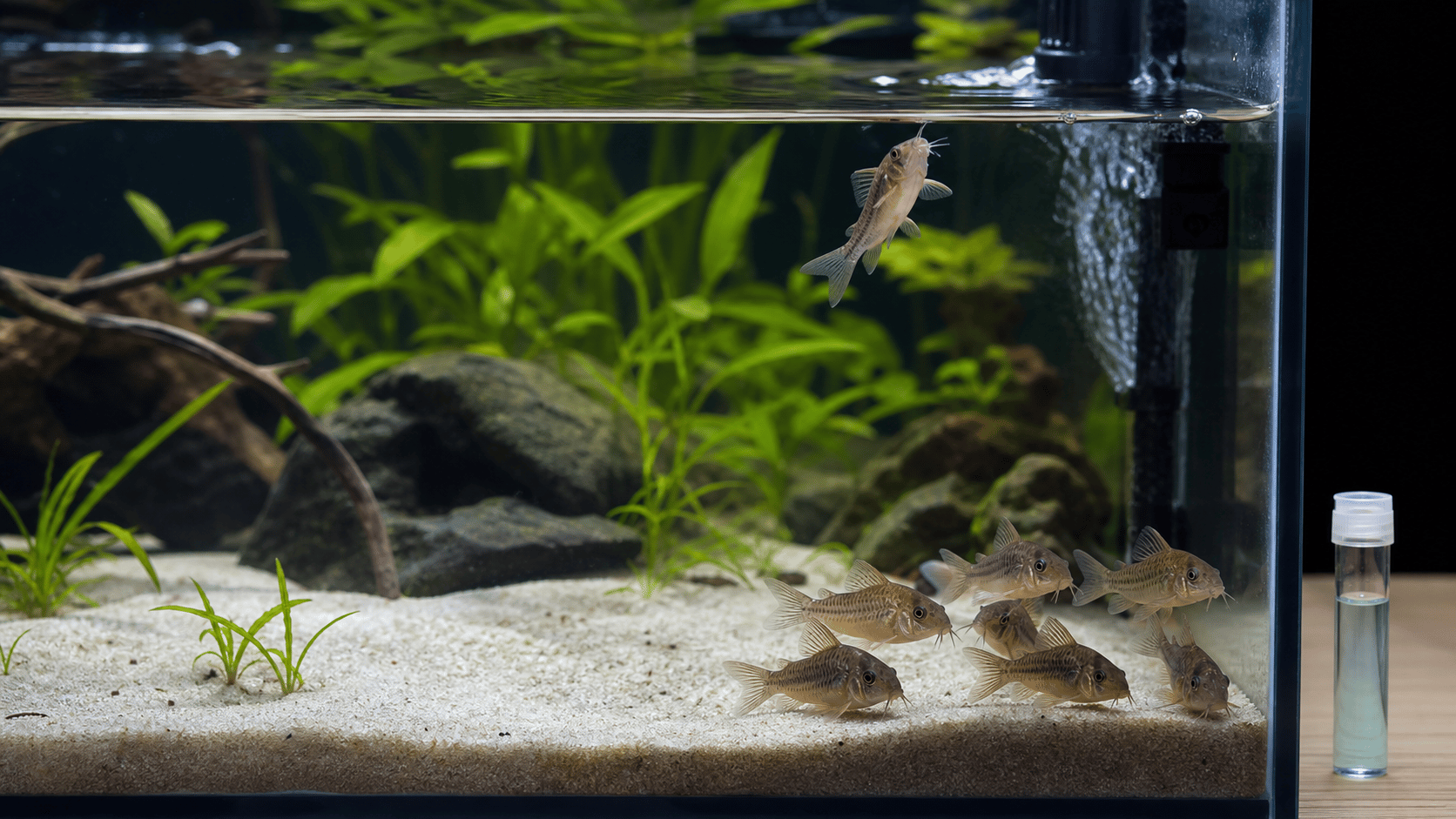
Corydoras occasionally swim to the surface to gulp air, which is normal. Frequent surface swimming may indicate low oxygen.
Key Takeaways
- Corydoras occasionally swim to the surface to gulp air, which is normal. Frequent surface swimming may indicate low oxygen.
- Check ammonia, nitrite, nitrate, pH, and temperature before adding medication.
- Treat gasping, ammonia spikes, rapid breathing, or severe lethargy as urgent.
Use the AI Diagnosis Tool
Get a personalized diagnosis based on your specific situation.
Open AI DiagnosisCause Routing: What the Signs Can Mean
Normal behavior
Corydoras can gulp air from the surface.
Low oxygen
Insufficient aeration.
Ammonia/nitrite
Gill irritation from poor water quality.
What to Test and Check First
- How often it happens
- Aeration
- Water parameters
Do This First
- Observe whether one fish or the whole tank is affected.
- Test ammonia and nitrite before changing treatments.
- Improve aeration and remove uneaten food while you diagnose.
Immediate Safe Actions
- Increase aeration if frequent
- Test water parameters
What Not to Do
- Do not panic if it happens occasionally
When to Seek Help
- If happening very frequently
- If accompanied by gasping
Related Fish Guides
Frequently Asked Questions
Is it normal for corydoras to swim to the surface?
Occasionally, yes. Corydoras can gulp air. If it's happening very frequently, check oxygen levels and water quality.
This information is for educational purposes only and does not replace professional veterinary advice. If your fish shows severe or persistent symptoms, consult an aquatic veterinarian or experienced local fish store.
Sources and Review Process
- Freshwater aquarium husbandry references for water quality, tank size, and stocking guidance.
- Species profiles and compatibility rules maintained in the AquaScience AI data set.
- Aquarium health guidance is educational and should not replace an aquatic veterinarian for severe symptoms.
Related Care and Problem Guides
Tank size, diet, temperature, and common problems for Corydoras.
Fish not eating can be caused by stress, poor water quality, disease, temperature issues, or new tank syndrome. Check water parameters first.
Fish gasping at the surface usually indicates low oxygen, ammonia/nitrite poisoning, or gill disease. This is an urgent situation.
Fish staying at the bottom can be normal for bottom dwellers, but for other fish it may indicate illness, stress, or poor water quality.
Some hiding is normal, but excessive hiding can indicate stress, illness, or bullying from tank mates.
Use this after the initial tests and observations in this guide, not instead of them.
Confirm actual water volume before measuring a partial water change.