New Tank Syndrome: The Aquarium Nitrogen Cycle, Testing & Prevention
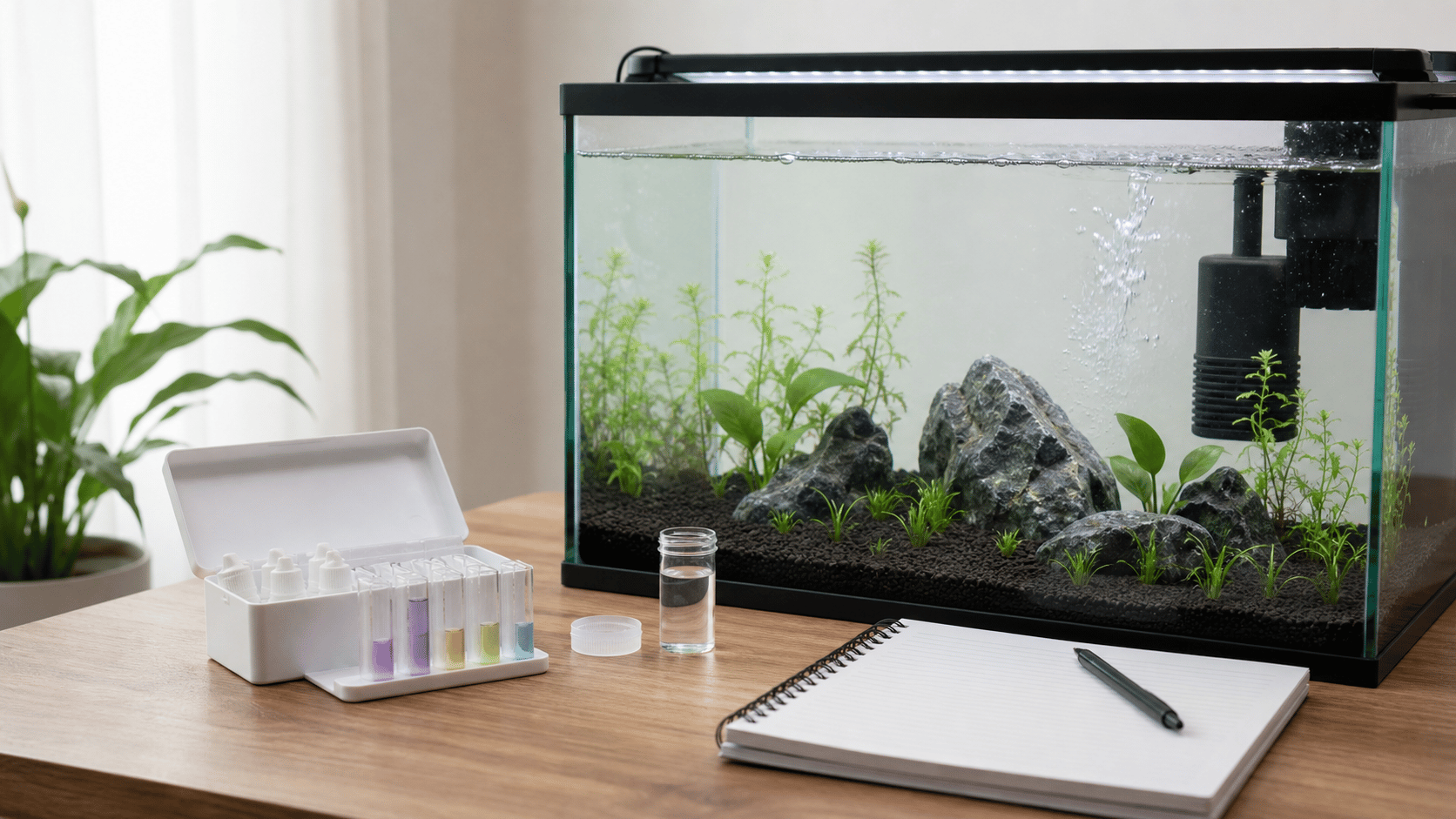
New tank syndrome is a system-level failure of an uncycled aquarium: the biological filter has not yet built enough nitrifying bacteria to convert toxic ammonia to nitrite and then nitrate. It is different from a one-off ammonia spike because the underlying cycle is still incomplete.
Is This Urgent?
- If fish are gasping, ammonia or nitrite is detectable, or multiple fish are distressed, use the ammonia-spike emergency guide rather than waiting for the cycle to finish.
- Do not add more livestock while tests show ammonia or nitrite; the biological filter is not ready for more waste.
Key Takeaways
- New tank syndrome is a system-level failure of an uncycled aquarium: the biological filter has not yet built enough nitrifying bacteria to convert toxic ammonia to nitrite and then nitrate. It is different from a one-off ammonia spike because the underlying cycle is still incomplete.
- Check ammonia, nitrite, nitrate, pH, and temperature before adding medication.
- Treat gasping, ammonia spikes, rapid breathing, or severe lethargy as urgent.
Use the AI Diagnosis Tool
Get a personalized diagnosis based on your specific situation.
Open AI DiagnosisCause Routing: What the Signs Can Mean
Uncycled tank
The biofilter has not established enough nitrifying bacteria to process waste from ammonia to nitrite and then nitrate.
Adding fish too soon
Livestock produces waste before testing shows that the nitrogen cycle can process it safely.
Overfeeding
Excess food decomposes into ammonia and can overwhelm an immature biofilter.
What to Test and Check First
- Ammonia, nitrite, and nitrate with a reliable aquarium test kit
- Tank age, recent stocking, and whether the filter has run continuously
- Whether ammonia and nitrite remain at 0 before more fish are added
Do This First
- Observe whether one fish or the whole tank is affected.
- Test ammonia and nitrite before changing treatments.
- Improve aeration and remove uneaten food while you diagnose.
Immediate Safe Actions
- Test water daily
- Perform water changes to keep ammonia/nitrite below 0.5 ppm
- Keep the filter running continuously and avoid replacing all biological media at once
- Reduce feeding
What Not to Do
- Do not add more fish
- Do not clean the filter in tap water
- Do not do 100% water changes
When to Seek Help
- If ammonia or nitrite is above 1 ppm
- If fish are dying
Frequently Asked Questions
What is new tank syndrome?
It is the unstable period before a new aquarium has enough nitrifying bacteria to process fish waste. Ammonia can rise first, followed by nitrite; nitrate is the later product to track with testing.
How long does it take to cycle a tank?
There is no guaranteed calendar date. The aquarium is ready only after testing shows its biological filter can consistently process the planned waste load without detectable ammonia or nitrite; this often takes several weeks.
What is the difference between new tank syndrome and an ammonia spike?
New tank syndrome is the underlying system problem: an immature biological filter cannot process waste reliably. An ammonia spike is the urgent event that can result. Treat a current spike first, then correct the cycling and stocking issues that caused it.
This information is for educational purposes only and does not replace professional veterinary advice. If your fish shows severe or persistent symptoms, consult an aquatic veterinarian or experienced local fish store.
Sources and Review Process
Related Care and Problem Guides
Use this separate guide when ammonia is already present and fish need immediate protection.
A common urgent symptom when water quality or oxygen is poor.
Plan conservative stocking once the aquarium is fully cycled and stable.
Use this after the initial tests and observations in this guide, not instead of them.
Confirm actual water volume before measuring a partial water change.