
Waarom vertoont mijn vis Algen in het aquarium? Oorzaken en oplossingen
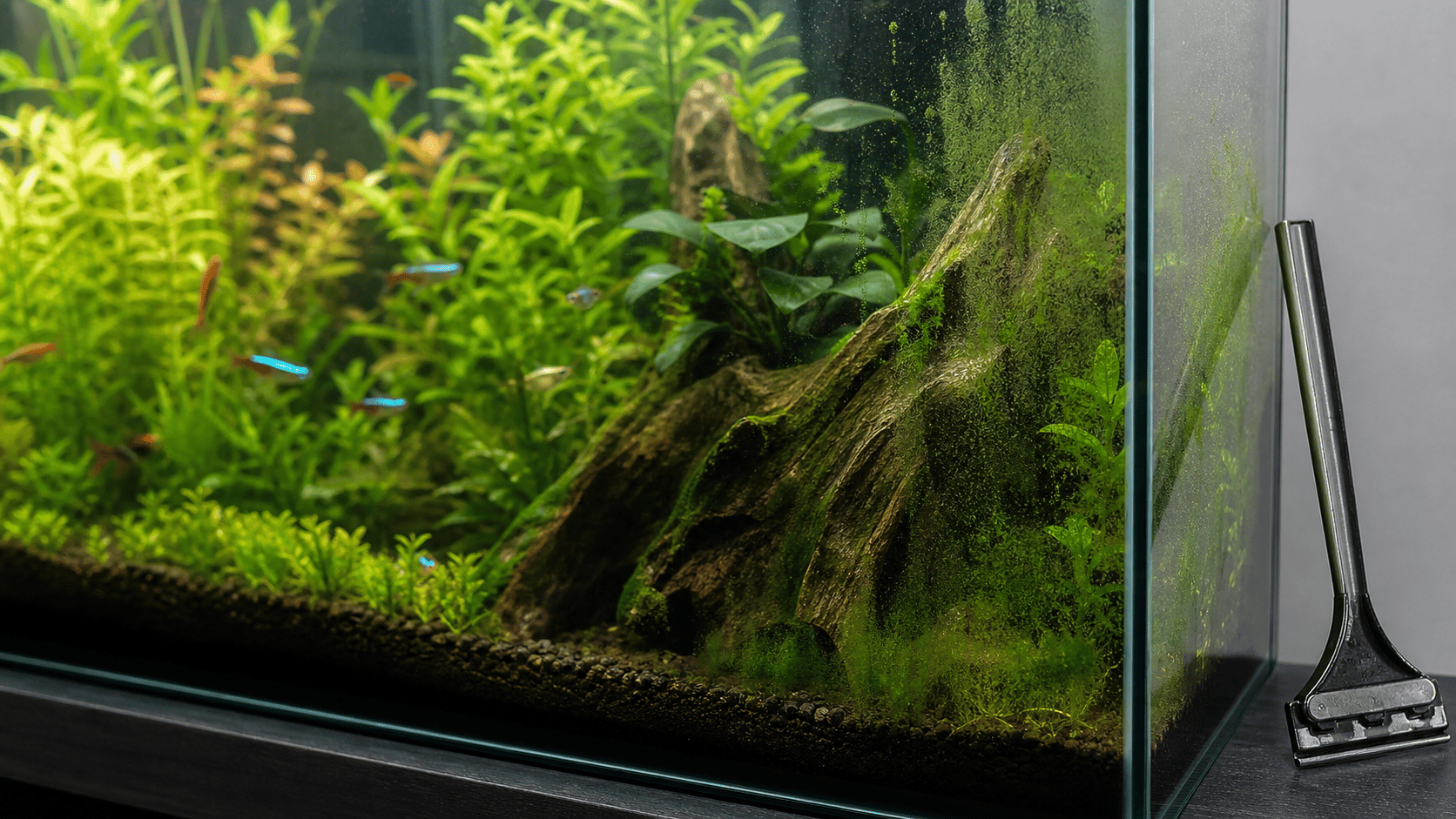
Algengroei is normaal, maar overmatige algen wijzen vaak op een onbalans van licht, voedingsstoffen of CO₂.
Key Takeaways
- Algengroei is normaal, maar overmatige algen wijzen vaak op een onbalans van licht, voedingsstoffen of CO₂.
- Check ammonia, nitrite, nitrate, pH, and temperature before adding medication.
- Treat gasping, ammonia spikes, rapid breathing, or severe lethargy as urgent.
Use the AI Diagnosis Tool
Get a personalized diagnosis based on your specific situation.
Open AI DiagnosisCause Routing: What the Signs Can Mean
Te veel licht
Te lange of te sterke verlichting.
Overmatige voedingsstoffen
Te veel voer of afval.
Te weinig planten
Planten concurreren met algen om voedingsstoffen.
What to Test and Check First
- Verlichtingsduur, doorgaans 8–10 uur
- Voerhoeveelheid
- Voedingsstoffenniveaus
Do This First
- Observe whether one fish or the whole tank is affected.
- Test ammonia and nitrite before changing treatments.
- Improve aeration and remove uneaten food while you diagnose.
Immediate Safe Actions
- Verlaag verlichting tot circa acht uur
- Verminder voeren
- Ververs deels
- Overweeg alleen bij passende omstandigheden algeneters zoals Amanogarnalen of otocinclus
What Not to Do
- Laat licht niet 24 uur branden
When to Seek Help
- Als algen ondanks aanpassingen onbeheersbaar blijven
Related Fish Guides
Frequently Asked Questions
Hoe verminder ik algen?
Verminder licht tot ongeveer acht uur, voer minder, voeg levende planten toe en overweeg algeneters alleen als aquarium en waarden passend zijn.
This information is for educational purposes only and does not replace professional veterinary advice. If your fish shows severe or persistent symptoms, consult an aquatic veterinarian or experienced local fish store.
Sources and Review Process
- Freshwater aquarium husbandry references for water quality, tank size, and stocking guidance.
- Species profiles and compatibility rules maintained in the AquaScience AI data set.
- Aquarium health guidance is educational and should not replace an aquatic veterinarian for severe symptoms.
Related Care and Problem Guides
Tank size, diet, temperature, and common problems for Amano Shrimp.
Tank size, diet, temperature, and common problems for Otocinclus.
Tank size, diet, temperature, and common problems for Bristlenose Pleco.
Use this after the initial tests and observations in this guide, not instead of them.
Confirm actual water volume before measuring a partial water change.